Pages

Thursday, January 14, 2010

In our prayers!


All victims of natural and non-natural disasters in Haiti and around the world are in our prayers!

Picture: http://media.ft.com/cms/e50cbb40-0027-11df-8626-00144feabdc0.jpg
http://www.bbc.co.uk/worldservice/assets/images/2010/01/13/100113105603_haitiquake_466x262_afp.jpg

Wednesday, January 13, 2010

A teacher who changed my life

His name was U Kaung Kyaw Tun. Actually, he was not a teacher. He was my uncle, a guard or a guider. Nevertheless, his visions made me to move forward. His teachings with passion made me worth of meanings in my whole life. His home library made me to see wider and broader views not only just in me, but also the outside world. He made a huge difference in my life.

I was a villager who was grown in very remote area of Burma. I arrived at my uncle’s home in the city, in order to study when I was an eighth grader. My uncle had two bookshelves with many books. A couple days later, after I arrived there, I began to read students periodicals, such as Aurora and Teza (Young Leaders) journals under my uncle’s guidance. Teza journal was written in only Burmese and Aurora was printed in both English and Burmese. My uncle always encouraged me to read essays and editorials of those issues. I read them. Eventually, I became a good reader. I also began to know the values of books. I could say that the books were windows to see, feel, learn, know, touch and contact with the other people, other cultures and other places of the world. (Nowadays, computer took over that place.) Gradually, I fall in love with reading, one of the most valuable heritages in my life, which I was given.

In dinner times and on weekends, he often told us about the great leaders and respectful persons in the world history, such as Abraham Lincoln (USA), Mahatma Gandhi (India), General Aung San (Burma), Martha Trisha (Calcutta), Winston Churchill (the United Kingdom), Napoleon (France), Mao Zedom (China). Every time he told about those persons, he also said that ‘You guys also can be anyone of like them; the only thing you need is, your self-belief and passion to follow your dream.’ When we were inspired by knowing about great individuals, their lives, their visions, their contributions in the world history, whether we also become great leaders or not, in the bottom line, it guided us to become good people, with good characters and big dreams.

One day, he told us that to put our school bags, books, shirts at the higher places where we could not reach for easily. Then, when we tried to reach for our things, we were already exercised to become tall persons.

Moreover, he often told the valuable words, such as “if you ignored on learning, this meant you ignored your life because life was full with learning processes.” “Under the word of success, ‘self-discipline’ is on the top.” “With passion, think about the others, help the others, then you will be thanked and helped already in your life.”
Precisely, my uncle who was a teacher, an immigrant officer, a member of city council made me to become a good reader, a young man with self-discipline and big dreams, loving and helping on the others as much as I can.

As a traditional Buddhist, almost every night before I sleep, I worship five greatnesses in my life those are;
- The Buddha
- The Dhamma (the Buddha’s teachings)
- The Sangha (Monks and Priests)
- The Mada & Pida (all my parents, guarders and world leaders)
- The Arsariya (all my teachers).
In my worship, my uncle is always included in both places of my parents and my teachers.

Thank you!

Tuesday, January 12, 2010

An Interview with Dr. Aye Kyaw (Ph.D.)


Dr. Aye Kyaw (Ph.D) was a professor in Cornel University, New York. He is also a Burma Expert and a writer. He won National Literature Award with his book, ‘The History of National Education of Burma’ in 1971.

Q: Within 60 years after independence, people of Burma experienced three main administration eras those are Parliament Democracy, Burmese Socialist Program Party and State Peace and Development Council (military). In under which administration has more participants and participations of non-Burman nationalities in Burma’s politics?
A: It was Parliament Democracy era. There were two Hlawttaws (upper and lower parliaments), and many ethnic representatives, such as Shan, Kachin in both parliaments through out Burma’s constitution. Military rule of General Ne Win came up since 1962; all those political systems were abolished.

Q: Do you think that people had more freedom and rights under parliament democratic government (from 1948 to 1962)?
A: Yes. We can say that under the democratic government, people had more rights and freedom to speak, to write and to read than the other two administrations. We also had academic freedom. I was a student in that era and a teacher as well. Unless you had true quality, you could not pass the exams in that era. If you had any kind of art or science degree, you got good job, people’s attention and sort of respect. Even to pass high school was hard.

Q: So, do you want to say education in that era was more effective and standardize?
A: Yes. You also can choose any subject whatever you want to learn in your life. You just need to pass the entrance exam for that field.

Q: You said you had more freedom to write, express and so on under parliament democracy. Can you say something, which you have experienced for example?
A: I remember that once, there was a cartoon, I believe it was in the Mirror; a monkey was swinging around from one tree to another, with joking content and a representative who changed from one party to another’s name. If you draw that kind of cartoon on these days, you will be in the jail.

Q: On those days, population of Burma was less than half of today’s population but there were much more newspapers (more than ten times) were published than today, according to journalism records. Was it correct? What do you think about that?
A: Yes. There were many newspapers and many people also read because most of us had stable income and anybody who had a job was able to buy newspaper because the price of papers were also very cheap. I was a teacher tutor. With my salary (monthly), I was able to buy gold. Gold price for one ounce was around 250 to 280 kyats. My salary was 175 kyats. So you can imagine the situation of my income and prices of goods on those days. (Nowadays, a teacher makes about 50,000 kyats per month and gold price (one ounce) is more than one million kyats.)

Q: So, you want to say Burmese currency unit ‘kyat’ was much more reliable, valuable, stable and accurate than today?
A: Yes. Not only Burmese currency was stable and valuable, the government itself made such a transparency between administration and people of Burma. The Union Bank of Burma announced every three months about how much cash or gold or treasure had in the bank as a responsibility of democratic government.

Q: You are a university professor who has had a chance to live in all those three eras. In which era, people of Burma were/are more interested in politic than the other two; what do you think?
A: I will say that people were more interested in national development, rather than politic, was in parliament democracy era because we elected our representatives by ourselves; we could see what members of parliament were discussing, doing, acting, debating on television, whether which was good or bad; we had chance to clearly know and see what government was doing and happening in administration. That’s why people naturally had more national interest under the democratic government than any other era in Burma.

Q: Any way, as a person who has been living through out all three administrations, can you tell me something incredible that makes you to remember whether for your life or for your country?
A: It was ‘freedom to choose’ for your life. Every young Burmese had grand opportunity to choose any career for his or her life. After we finished our high school, we could freely choose whatever we wanted to be. If you want to be a doctor, you could try to pass the entrance exam, such as ‘biology combination.’ If you made it, go to medical school and be a doctor. Whatever you wanted, you had opportunity to decide by yourself for your interest and career and try on it. I think it is one of the most (probably the most) important chances in our lives, especially for young generations.

Q: It is obvious that parliament democracy era was much better and greater for people of Burma than Socialist and Military administrations. Any way, let us find the silver ring of the other two clouds. Between BSPP and SPDC, which is better for the country, do you think?
A: It was General Ne Win’s era because the socialist administration was bad but it still had more reliable and unbiased judicial system than the current junta. If an officer or anybody made mistake or power abuse, you can write or inform directly to the top authorities of General Ne Win and that officer or that person could be charged. Nowadays, if you inform about an officer’s power abuse, you will be in the jail.

Q: Finally, what do you want to say something for Burmese youths?
A: Two things:
First: Which way do you want to go; by the path of a bee or by the path of a fly, please ask by yourself? Bees always try to take the sweetest flavor from the most beautiful flowers to their home (beehive). Flies are always looking for where is the oldest place with the worst smell and they enjoy there. Which way do you want to go? Please be bees!
Second: Keep with four Ds;
Dream (what you want to be in your life),
Determination
Discipline, and
Drive.
Good Luck!

Thank you very much.

Monday, January 11, 2010

Dead Poet’s Society


In the movie, “Dead Poet’s Society,” the way that Mr. Keaton’s teaching style is – of cause, very effective way. There are three key teaching styles, which are greatly done.

First day, Relax, and Life-long Lesson

On the first day introduction, while many other teachers are talking about discipline, tests, lectures, grading and intolerant matters, instructor Keaton comes to the class with a whistle that makes students’ relaxation and familiarity with instructor. In order students to pay attention on daily lessons and activities, to practically realize the value of time (present time), he let them see the pictures of former students who were some successful in their lives, and died already. It is very effective life-long lesson for young students to see how our lives are erased easily and quickly. How it is important to live effectively and productively in present moment for us? He gives a light his students with the lesson of “Seize the Day,” on the first introduction. He begins the first step with a very valuable lesson in order to go thousands of miles.

Words, Words, Valuable Words

In a class, a teacher’s words are always or very often influence on students. Teacher’s words can make them to be happy, sad, angry, confused, clear, encouraged, challenge, change, etc. Basically, teachers’ words are very powerful for students. Mr. Keaton accomplishes this job wonderfully. Please take a look the followings, which are his powerful meanings:
“Seize the day. Make you lives extraordinary!”
“That the powerful play goes on, and you may contribute a verse. What will your verse be?”
“Now, we all are a great need for acceptance, but you must trust that your beliefs are unique, your own, even though others may think them odd and unpopular.”
Physical Activity, Funny, and Mental Healthy
Physical activities, group activities and outdoor trips often make us to be familiar, to be closer, to understand and to be understood each other in the class or in the group. We also become more active, more courageous to speak and to act something among the classmates.
Instructor Keaton did this effectively as below:
“Shout something yourself and kick the ball!” How fun and make students to come up with more openness, that activity is!
“Left, Right, Left, Right.. Find your won walk, own direction!” With that little militarized activity, he gives a greatest gift to his students that to search their own paths.
“Come here, everybody. Stand on this table and look around. What and how do you see from here?” Lucky students have great opportunity to practically realize a great lesson that how we see different views from different locations.

Conclusion

He makes relaxation and impress for his students on day one. He inspires them with his powerful and meaningful words. He makes them to be happy and realize life-long lessons with outdoor activities. They all are such great approaches or effective methods. In the last scene of the movie, we can see that Todd Anderson who was afraid of almost everything in past becomes the bravest student to stand for the truth or for his belief, which approves enough that Keaton’s teachings are impressively effective on his students. Nevertheless, as a saying that every coin has two sides, there is something lack in Mr. Keaton’s method, which should be added just about 15 percent, was – ‘discipline – or self-discipline.’

Picture:https://blogger.googleusercontent.com/img/b/R29vZ2xl/AVvXsEjJnNzSpUBcnEulh5o0JPZvYHmx_sN_4HXhvn3EAmjb4rj3iZg5V5WRbDpyt7uDFPaMsOO8NX89Ba_7zNDFGgupr4tcczdiPE4OXodFxE5Z5phJjgyyso8NXi8b7_nvKaNl3TJCC_xTwg7C/s1600-h/DeadPoetsSociety1989CD2.avi_003839798

Sunday, January 10, 2010

Treasure

What is treasure? In Longman dictionary of American English, the meaning of treasure is, 1. A group of valuable things, such as gold, silver, jewels, etc., 2. A very valuable and important object such as a painting or ancient.

According to the Buddha’s teaching, there are six characteristics of treasure:
(1) It is wonderful or strange. (It is not a normal, usual and ordinary matter.)
(2) It is likable or adorable.
(3) It is unique, which cannot be made imitation or cannot be faked.
(4) It is rare (to see, to meet, to own, etc.)
(5) It is high worth. It has higher value than many other materials.
(6) It can be owned by classical people, higher standard persons.

So, the Buddha pointed six characteristics of a treasure.

Any way, how do you make a measurement on a thing if it is a treasure or not?

Thursday, December 31, 2009

Happy New Year Resolution


In 2009, I made the following resolutions:
(1) Free Alcohol in January, February, March and April of 2009.
(2) I will try to be more a doer, rather than a sayer.
(3) I will post some Arakanese pages in this blog.

For the resolution 1, because of one of my mistakes, I had to be free alcohol from January to June (two months longer than original resolution plan).
For the 3rd, I did.
For the 2nd resolution, I do not feel I did enough.

Alright. For 2010, I will have only One Resolution, which is – I will fight Oo Thein Maung of 2009, till I win!

Thank you!

Meanings of the Given Names (X, Y, Z)

Yates = Gate
People often ask me about - what does my name mean. Sometimes, I also ask other peoples if his or her name means something. These are not important but it is good to know about each other in our cultures of mankind. For my friends who want to know, the meanings of (Western) given names:

Men’s Names (X,Y,Z)

Xavier: (Spanish-Arabic) New house; brilliant
Xerxes: (Greek-Persian) King
Yates: (Old English) Gate
Zaccheus: (Hebrew) The righteous one; pure
Zebulun: (Hebrew) Habitation
Zenas: (Greek) Gift of Zeus, the chief Greek god.

Women’s Names (X,Y,Z)
Xenia: (Greek) Hospitable
Yolande: (Latin-French) Violet
Yvette, Yvonne: (Hebrew-French) Gracious gift of God
Zena: (Persian) Woman
Zoe: (Greek) Life

Source: Smith, Elsdon C. “Vocabulary of Given Names.” The World Book Dictionary.1968.

Note: All these pages were copied. Nevertheless, at least, I finished the job from A to Z of meanings of the given (western) names today, exactly on the last day of the year of 2009. Whatever it is, I take personal appreciation from this. Thanks everybody!

Thursday, December 17, 2009

After Fall, Spring will be coming!

Today, I finish my official studying for this semester as a college student. In this semester, I take three classes those are Tennis, Introduction to Education, and English Composition (two).

Tennis class was done earlier than the other two. It was great that at least, I could play tennis much better than before.

Introduction to education class was also finished on last Monday. I feel I did well in that class. Our instructor was also very kind and enthusiastic in teaching since she taught in high school and at college as well. I took that class because of my interest in teaching. I was a teacher in Burma. I taught English, Math and History to 6th, 7th and 8th graders. I had a successful history in teaching. Till I was in Thailand, I was receiving more than 50 letters from my students and almost all letters described that my students wanted to come back and teach them. I miss my students and I deeply and honestly wish them to be successful in their lives.

I took English composition class intently in order to improve my English writing. It was also a great class. Our instructor was a teacher and also a writer. Her explanations are always very good and her hand writing is among one of the most beautiful kinds. At least I learned in this class the strategies of writing and evaluating on the sources, and how to research systematically.

Well, life is full with struggling and learning itself, after this semester, there will be many other semesters are waiting for me to give more challenges, different touches and lessons. The most important thing is to be honest by myself and to try my best in any field, any time for any reason.

Special thanks to my instructors / teachers!

I also give my thanks to all my friends and foes. Thanks all!

Monday, November 23, 2009

Religious Study: The Middle Path


Recently, I visited to Wheaton Warrenville Sough High School in order to educationally observe. The following is my brief experience from one of the classrooms.

In a religious class, students learned and discussed the concepts, ideas and terms of the five major world religions. On the day that I observed, students were very interestingly learning about the terms of The Ka’aba, Ramadan, Hajj, Kosher Laws, Jehovah / Yahweh, Yom Kippur, Rosh Hashanah, Diwali, Ahimsa, The Middle Way, Book of Revelation and Gospels. I saw many critical questions, which students made on the board and their discussions were really high and standardize.

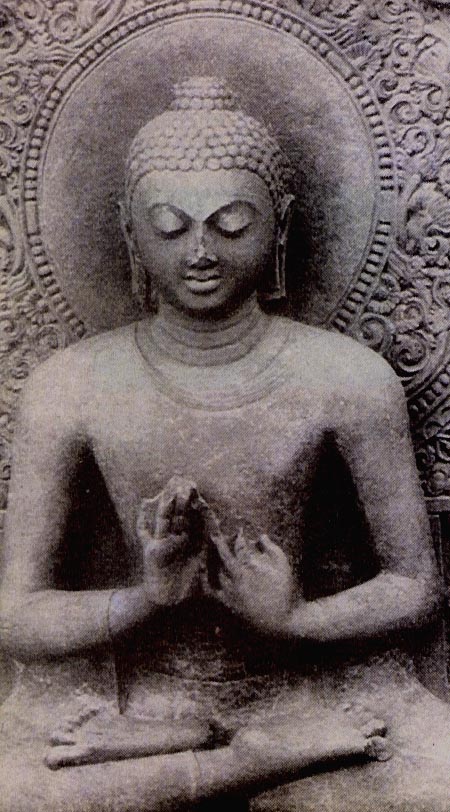
I was asked by the teacher to introduce by myself with the class and also to contribute something in the class about the religions. I said that I was a Buddhist monk about one year. Then, teacher asked me to make an explanation about the “Middle Path” of the Buddhism. “Middle Path” is one of the prime concepts, which the Buddha taught. Probably it was theme of Buddhism.
The key meaning of middle path was ‘to avoid the extremism’ in any part of our lives and conditions; even to love, hate, like or dislike on anything, any person, any opinion, any fact, and so on, because no man or nothing is perfect. No body or nothing is perfect to be extremely loved or hated or liked or disliked. Besides, nothing is permanent; everything was changing; is changing; and will be changing. As soon as we extremely love or hate or like or dislike on something or somebody, it makes us to not to see the truth. We could be seeing, thinking and pointing unfairly because of that extremism, which we are having. Reversely, as soon as we avoid that extremism, we are able to see things, cases, problems, persons clearly. Therefore, it makes us to see the truth and it also always makes the appropriate way. Moreover, the ‘middle path’ also reminds us to not to be extremely sad because of very poor conditions in our lives and at the same time, to not to be extremely happy because of very good conditions in our lives. Nothing will be everlasting. In time, it will be changed or erased. Hence, that middle-path approach also makes us to be appropriate living in our daily lives.
It was my contribution about the Buddha’s middle path in that religious class.
Picture: http://adreampuppet.files.wordpress.com/2007/01/buddha-3.JPG

Tuesday, November 3, 2009

Expectation Theory


In this semester, I am taking the classes of Introduction to Education, and English Composition. Both classes are very interesting.
One of vocabularies those we have to learn in Education class is ‘expectation theory.’ After I read about this theory, I would like to tell or discuss with you as the followings:

Natural Matters

In one of the Buddha’s teaching verses, it said that:

There are four kinds of rats –
Some kinds of rats dig the tunnels, but they do not live in the tunnels.
Some kinds of rats do not dig the tunnels, but they live in the tunnels.
Some kinds of rats dig the tunnels, and they also live in the tunnels.
Some kinds of rats do not dig the tunnels, and they also do not live in the tunnels.

So, what will be or which kind will be your expectation when you see a rat?

According to that verse, there are also four kinds of rains –
Some kinds of rains could make thunders, but they do not actually rain.
Some kinds of rains could not make thunders, but they actually rain.
Some kinds of rains could make thunders, and they rain as well.
Some kinds of rains could not make thunders, and they do not rain as well.

So, what will be your expectation when you hear or see a thunder or cloud?

In that verse, it is also expressed about four kinds of fruits –
Some kinds of fruits have the color of green, but they are actually ripe.
Some kinds of fruits have the color of ripe, but they are actually green; which are unripe.
Some kinds of fruits have the color of green, and they are really green.
Some kinds of fruits have the color of ripe, and they are really ripe.

So, what will be your expectation when you see or get a fruit?

All these rats, rains and fruits are truly natures. What can we truly expect from nature? The above examples show that we can expect from nature, almost nothing. In other words, we can expect something from nature, but carefully because whichever you expect, literally, there is only 25 percent of chance with you.

Manmade Matters

After an excerpt of sharing about natural matter, let’s continue the manmade things.

Firstly, let us read the prime definition of expectation theory.
Expectation theory: First made popular by Rosenthal and Jacobson, this theory holds that a student’s academic performance can be improved if a teacher’s attitudes and beliefs about that student’s academic potential are modified.
Inversely, if a teacher have lower expectation about a student’s academic potential for any reason, such as background of certain student’s, that can make academically suffering in student’s performance.

Alright. One thing that theory did not discuss was, how about if a teacher has extreme highly expectation on a student’s academic potential (for any reason), and the student does not perform well, even at the averaged level? Could the consequences make suffering for student or for teacher or for both? Thinkable matters. Similarly, it happened between Chicagoans or people of the United States and the result of hosting city for 2016 games.

Nowadays, the other matter that I would like to discuss with my readers is, about the color of the clothes. What do you or what can you expect or what do you believe in a person who is wearing a red shirt, or a blue shirt, or a black shirt, or a green shirt or a yellow shirt? It might be important with the color of shirt for some reason for some situation. Nevertheless, in my very own opinion, and especially for the person like me, the color of shirt is not important almost at all. The key is - where I stand for? What I believe in? What is inside of me? Not the color of my shirt. I am talking here how America has freedom to the other world and if I, by myself do not have freedom to wear whatever color shirt I have or I want, what is that freedom? I am not that much clever person. I cannot or I do not want to sell ‘medicine of freedom’ with deep disease inside me. I might be a foolish man indeed. I do not want any kind of position or money for it. But it is me. Let me die poorly, early and simply. I am not talking here about some kind of color and suit I have to wear for specific reason or for job nature or for a ceremony and so on. It is culture and in certain condition. I will be there at that time. But in daily life, I must have my freedom choice. Nobody can control me to wear this kind of color or that kind of suit. But at the same time, what color ever I am wearing, I will be standing for what I believe in, such as ‘Freedom’ and ‘Democracy.’ Any person, any nationality, any skin color, any gender, any religious person, wherever they may live, who stand for ‘freedom’ and ‘democracy,’ is/are my friend/s.

As our former president, JFK said in his speech in Berlin, “Freedom has difficulty, democracy is not perfect,” but we have more freedom than many other societies in the world, with empathy, sympathy, support and respect among human beings. How long it may take us, let us expect for more freedom world, with democracy and dignity.

Thank you!