Pages

Monday, January 19, 2009

What do I learn from Dr. Martin Luther King Jr.?


(Dr. Martin Luther King Jr.)


“I have a dream that one day this nation will rise up and live out the true meaning of its creed: "We hold these truths to be self-evident, that all men are created equal.”

“When we allow freedom ring, when we let it ring from every village and every hamlet, from every state and every city, we will be able to speed up that day when all of God's children, black men and white men, Jews and Gentiles, Protestants and Catholics, will be able to join hands and sing in the words of the old Negro spiritual:
Free at last! Free at last!
Thank God Almighty, we are free at last!”

(Excerpts from Dr. Martin Luther King Jr.’s ‘I have a dream’ speech.)

Dr. Martin Luther King Jr. was one of the most powerful thinkers, speakers and visionaries in human history, especially in the twentieth century. His many ideal thoughts impact my life.

Dr. King’s words, which firstly introduced me, were “Love your enemy!” When I heard these words, I could feel - “It is strange” “It is impossible,” and “I don’t understand.” Actually, these words represent a real human being’s kind heart and high moral standards. Since I heard and thought about these words, I heartily admired Dr. King. Yes, as we are human beings, we suppose to love any of our friend or foe. We do not have to like our enemy but we can love them. Then, I think, sometimes, I may not like my wife, my children and even myself, but I love them. We can practice on our enemies in this way, too. As a traditional Buddhist, I worship almost everyday before I sleep. I always worship the Buddha, the Dhamma, the Sangha, Mada Pida (parents) and Arsariya (teachers). In the line of Arsariya, (among the teachers), Dr. Martin Luther King Jr. is always included because of his highest moral teachings. After I worship, I also always spread the good impact, which I could get something from the worship, to everybody of the whole world, which included all my supporters and even those opposed to my ideals.
(Dr. Martin Luther King and former U.S. President John F. Kennedy)
(Mahatma Gandhi and Winston Churchill)

The second ideal, which I learned from Dr. King, was ‘Non-Violence,’ which was based upon his high moral values. As we are human beings, we should try to solve problems without violence. Nevertheless, actually, non-violence process can be practiced only for high moral people of both sides between activists and authorities. Therefore, only a few non-violence movements successfully met their goals in the world’s history, such as between Mahatma Gandhi’s non-violence movement in India and government of the United Kingdom; between Dr. Martin Luther King Jr.’s civil-rights movement and John F. Kennedy’s American government; between Nelson Mandela’s anti-apartheid movement in South Africa and South African government. Unfortunately, most of other non-violence movements have been brutally and systematically destroyed by the powerful violent authorities both nationally and internationally. Whether non-violence movements are successfully accomplished or not, we all must accept its high moral and ethical values in all societies of the world and we also must make the effort to change our world to become a moral world or spiritual universe.
(South African Non-Violence Leader Nelson Mandela)

Third ideal, which Dr. King left for us was, “Love is principle of the world.” We, as human beings, could reach for the Moon, Mars, Venus and Jupiter within one hour; but without respect and love for each other, it is nothing! We could have incredible modern terms and innovations; but without respect and love for each other, it is nothing! We could have and practice dozens of government systems; but without respect and love for each other, it means nothing. We all could be millionaires; but without respect and love for each other, it means nothing!

Fourth ideal, which Dr. King pointed, was about the globalization. He said that even before the breakfast, we depend on the half of the world because many materials in our bathrooms and kitchen come from several countries of world’s continents. For example, small tower in bath room come from Nicaragua, South America, while big tower and toothpaste are imported from Kenya, Africa and China, Asia. Stove in the kitchen come from Canada, North America, while glasses and silverware are imported from Australia, Australia and Iceland, Europe. The world is perfectly formed by itself. We have several skin colorful peoples. We have several religions and beliefs. We have several languages, foods, cultures, places, climates and products. One thing, which we have - does not have in the others; and another thing, which they have – does not have in our country; and vice-versa. This means we depend on each other. Nobody or no nation is perfect. We suppose to fill each others’ needs; we suppose to support each others’ weak points; we suppose to respect and love each other.

There are many spiritual and moral ideals of Dr. King, which taught and demonstrated for me and for us as well. Most of them are based upon great moral steps, such as tolerance, patience and non-violence. All these matters are also based upon compassion. Compassion based upon Love. As conclusion, what we have to heartily learn from Dr. Martin Luther King Jr. is – Let us try to construct a moral society, which based in recognize, support, respect and love for each other among us in both of nationally and internationally.

Thank you!

Friday, January 16, 2009

Note for my former advice for Mr. President-Elect

In my suggestion,

First: We do need unity.

Sometimes, I am thinking that it will be good to have a strange and tough war with Mars or other planet/s, if it is possible. Probably, the whole world could be standing as one human being at that time.

Second: I am not talking it is that easy to rule a country but what I mean is, we need some spiritual leadership in this downturn period. Thousands of Americans died already in the wars. Millions are jobless. Hundreds of thousands of American youths are dropping high school out year by year. Obama’s administration has 1.2 trillion budget deficits. Many tough challenges are already existed in both of inside and outside of the United States. Like this period, we must fill not only the needs in the material blanks, but also morally leading. The leaders need to regards the people like their children, to feed, to take care of, and to defense from dangers. If leaders have their own discipline with confidence, that will help for themselves and for the people as well, since keeping silent self-promises always have unseen powers.

The darkest hours of the countries have passed by the spiritual leaderships, such as Abraham Lincoln and Franklin Delano Roosevelt in the United States, Winston Churchill in the United Kingdom, and Mao Zedong in China. They all gave incredible leaderships, which are based upon moral principles for their people. That’s what we need today.

Hopefully, our moral and material strengths those we have, are enough to smartly pass these dark hours!

Thank you.

Thursday, January 15, 2009

Two Special Advices for Mr. President Elect


On January 20th 2009, a new page will be turned in the history of the United States. Newly president-elect, Barack Obama will swear to faithfully serve for the people of the United States and people of the world, as well. Many people are eagerly and excitingly preparing to be part of this historic event. Great!

Any way, I have two special advices to give Mr. Obama in this point.

First: To use the words - ‘Let Us’ and ‘Together’ more than two times in your inauguration speech because it is the NEED.

Second: To stop your smoking by the best way, which will create the situation of win-win-win-win-win. I know how it is difficult to stop smoking because I do like smoking and I have tried several ways to stop. This is the best or the most appropriate way to stop smoking.
How?
This is sort of Administration-Resolution. The thing is - Mr. President-Elect needs to take an oath by himself that “I won’t smoke the whole period of my administration! If I can keep my promise by myself, my administration must be successful administration! If I cannot keep my promise by myself, my administration must be unsuccessful service!”
This is tough. Mr. Obama needs deep thinking and enough courage for this inspirational bow. But if he can do this, it will create incredible condition for his leadership because
(1) It will make him to be healthier. (Win)
(2) It will create ‘Powerful Self-Confidence’ for him. (Win)
(3) So, the United States will have young, strong, healthy and confident commander-in-chief. (Win)
(4) Obama administration will be one of the most successful administrations in the US history. (Win)
(5) Since the United States plays by the vital role in the world stage, it will create the healthier, wealthier and cleaner world. (Win)

WIN-WIN-WIN-WIN-WIN!

Through out my experience, many people cannot do it. As I told above, the process needs un-bounding-determination, courage and self-belief of the oath-taker, especially for a great leader.

I highly expect that our president-elect will do it. Let us create a great world!

Thank you. Have a wonderful, successful and happy new year 2009!


Picture: http://hugemagazine.com/blog/wp-content/uploads/2008/02/shepard-fairey-barack-obama.jpg

Saturday, January 10, 2009

Movie Discussion: Black Rain


Story by Masuji Ibuse
Directed by Shohei Imamura

I. Introduction
Many awards winning movie, which included Japanese Academy awards – ‘Black Rain’ is one of the most remarkable movies ever. The movie is directed by Shohei Imamura, based on the same name novel by Masuji Ibuse. Though the movie based upon atomic bombing at Hiroshima on August 6, 1945, theme of the film, is – the social and psychological consequences of the war and that attack, such as radiation sickness, social segregation, mental illness, post-traumatic stress disorder and so on and so forth.

II. Brief expression of the Film
Yasuko, a young and beautiful Japanese woman was in a tea party where several
miles away countryside from Hiroshima when the A-bomb blasted on the city. Shigematsu, Yasuko’s uncle was in one of the trains at Hiroshima. He was directly affected from the explosion. After Yasuko saw the mushroom shade - huge explosion in Hiroshima, she came back to the city in order to be reunion with her family. Yasuko, her uncle Shigematsu and her aunt Shigeko run away from the disaster area.
The family resettled in Fukuyama in May 1950, which was about five years later, after the Hiroshima’s nightmare. They escaped from the direct impact of the attack, but they became the victims indirectly. Shigematsu tried to get a cleaned and healthy certificate for Yasuko by several ways. In order to be available to get marriage, Yasuko needed a certificate, which will prove her good and healthy condition, though she was outside of Hiroshima when the exact time of the attack. Actually, though she was away from the city in the bombing time, since she came back to the city during the black raining period, she got radiation sickness.

III. Consequences and Lessons
A. Sudden Deaths and effects
According to the film, there were tons of thousands of sudden deaths in
Hiroshima at the time of bombing and after the bombed. Many people were walking around with blinded eyes, with abnormal brains and almost useless memory. One of the senses showed that a brother could not remember well his younger brother.
B. Psychological Impacts
In the film, actually, all of Yasuko, Shigematsu and Shigeko got
psychological effects. They all had abnormal feelings inside of them though they were living like they were happy. The worst thing was - they did not trust by themselves. Another psychological damaging view has occurred with a poor man, Yuichi who was a Japanese soldier during the war time. Nevertheless, his mental problem was not directly concerned with A-bomb, but it was direct impact of ‘war.’ How he was attacking the motor vehicles as ‘tanks’ because of the sound of engines. It was one of anti-war statements of the film.
C. Physical Impacts
Many people became physical disabilities was also expressed in the film. Some people who had damages from bombing were looks strong and healthy but actually, they were not. The sense of three men’s fishing revealed about it. They said that they wished they could be working. But it was impossible because they could not be available to work the hard works for scientific damages, which they got from explosion.
D. Lessons
The first lesson, which the film gave, could be simply - “War is Bad!” At
one of senses in the film, even Japanese soldiers said that “war is bad.” War always brings deaths, physical and mental disabilities, long term negative impacts, broken hearts, tears and so on.
We fight for territories. We fight for race and ethnicities. We fight for beliefs. We fight for isms. We fight for power. We fight for possessions. The second lesson could be “War was born together with our human beings!”
The third and final lesson could be a question, which we all have to ask
and brainstorm by ourselves that - “Is war evitable or inevitable, and why?”

IV. Conclusion
With fabulous actors; based in one of unforgettable events in world history; dramatic
actions and senses; giving many lessons, “Black Rain” makes two statements – “Anti-War!” and “Hiroshima was lost!”

Note: This was one of my essays in my class and just sharing with my dear readers. Thanks!
Picture: http://www.posteritati.com/jpg/B4/BLACK%20RAIN%20JP%20DIFF.JPG

Thursday, January 8, 2009

Law Maker, Law Breaker and Re-Resolution


On January 1st, I made my resolution and one of them was ‘free alcohol till April 30, 2009.’
Last Sunday, I went to an Asian market (H mart) for grocery shopping. Near to the entrance of the store, a beautiful girl was standing with a little table and there were few wine bottles on the table.

After I shopped, I stopped in front of the table and asked her what were they? She said those were Korean wine. I have never been tasted Korean wine before, so I asked her if I could taste. She said of cause, and I did. It was sweet and delicious. I asked her how to speak ‘thank you’ in Korean? She said she did not know because she was not a Korean. Then, I just smiled and said ‘thank you, happy new year.’ I totally forgot my resolution.

That Sunday evening, I did not remember about it, either. In the Monday morning, I woke up at about 5 a.m., because of my dream. I dreamed about that wine tasting. Then, I realized that – though I did not have any conscious mind and any ambition while I was drinking that little tiny cup of wine, I did something wrong.

I fully govern my body and my mind. I am law maker for myself. Therefore, I should not be law breaker for myself, too. I fondly accept that I deserve something for that little tiny cup of wine tasting.

I was thinking first to avoid drinking for the whole year of 2009. Then, I re-thought it was not fair because I did not mean anything about it. I was not doing it intently. I just remembered in the next morning about the connection between that tasting and resolution. So, I thought to stop my drinking till August. I was still feeling it was unreasonable. Finally, I decided to extend my ‘free alcohol period’ only two more months, till the end of June, for my unconsciously tasting of a tiny cup of wine.

So, I won’t drink / taste any kind of alcohol till June 30th of this year.
At least, I totally learned something from this event.
Law Makers should not be Law Breakers.

Picture: http://www.bouge.ca/img/law-school.jpg

Saturday, January 3, 2009

Book Discussion: Beauty and Sadness


I. Introduction
Beauty and sadness is kind of literature, which catering to aesthetic enjoyment and
pleasure indeed. In this novel, readers have the opportunity to learn about the deeper and broader meanings of the words, such as love, hate, sex, intimacy, marriage, family, young, old, art and so on. Moreover, the positive and negative parts of love; similarities and differences between love and intimacy; interesting relationships between old and young, single and married, different sexes and same sexes, also could be fondly explored in this book.


II. Main Characters
Oki Toshio:
He is key character of the story. Oki is a novelist who became well-known with the book, which has ordinary and straightforward name – ‘A Girl of Sixteen.’ He is a married man and has two children; Taichiro and Kumiko. Oki fell in love with a teenage girl, Otoko who gets pregnant but the child was not born. Oki also has intimacy with Keiko, an artist who is a pupil and roommate of Otoko. Any part of the story is related with Oki Toshio as one way or another.
Ueno Otoko: Otoko is a teen girl who is the lover of married man, Oki Toshio. She is main shadowed character of the book, ‘A Girl of Sixteen.’ She grown up in Tokyo but later moved to Kyoto and becomes an artist. She has a pupil and roommate, Keiko. After Otoko moves to Kyoto, she has several opportunities to get marriage but she stay as a single artist, lives together with Keiko.
Keiko: Keiko is a young female artist who is a pupil and roommate of Ueno Otoko. Actual relationship between Otoko and Keiko is more than the relationship between roommates, or, more than the relationship between pupil and teacher, or, more than the relationship between friends. Keiko strangely but deliberately tries to revenge on Oki and his family, for her teacher, lover, Otoko. She tries to have sexual relationships with both of Oki and his son, Taichiro. It is assumed that she did something dastardly in Taichiro’s death in the water, while they are boating.
Fumiko: She is novelist Oki’s legal wife. They have two children, Taichiro and Kumiko. Fumiko is some intelligent and she has sharp intuition about the relationships, especially for her husband, Oki’s. She knows unseen, but real stories of Oki. Because of children and family ties, she lives as Oki’s wife, but with sadness and doubts. She lives her whole life in darkness with unclear feelings and trusts.
Taichiro: Son of Oki Toshio and Fumiko. He is some educated person. He introduced with Keiko when she came to visit at his father, Oki. Later, Taichiro has intimacy with Keiko when he visits in Kyoto. He dies in the water, while he is boating together with Keiko.
Kumiko: Daughter of Oki and Fumiko. After she graduates from the university, married with somebody from London and she moves and lives there.


III. Opinion and Analysis
Love, especially sex is like a fire. When we use it in the right and appropriate way, it works fantastically and creates beautiful lives with win-win conditions. If we practice it in the wrong and unsuitable way, it makes blunders dramatically and generates lose-lose situation. At the same time, when we have enough chance and condition to control or avoid the touch between different sexes is very tough. Since then, people often fell in love; have the wrong intimacy or immoral sexes, and it also often produces worse consequences. Sometimes, it destroys certain persons’ lives. Sometimes, it destroys society and morality of human being. That could probably be theme of this book, ‘Beauty and Sadness,’ which Yasunari Kawabata primarily wants to give us.
The protagonist of this story, Oki who is a married man with two children has the immoral sex with a teenage girl till that girl gets pregnant. Love and attachment between the old man and teenage girl destroy lives, trusts, truths, clear feelings, respects of all family members of both sides. All lives are buried in darkness.
The unborn child of Oki and Otoko dies. Otoko’s family has to move to the different place. Otoko’s mother gets psychological suffering from it, till she dies. Otoko, by herself gets huge pain from it. Oki, by himself also has to live with the lies for the rest part of his life and could never trust by himself because we all know firstly - which is right and which is wrong; which is real and which is fake; which is true and which is lie, before we practice it over someone. He could not have true enjoyment and clear feeling and thinking in his life, after he makes the wrong sex, because that black shadow is following him in his mind and heart, all the time, as a backlash of its consequences. Fumiko, Oki’s wife is living with pain for the whole her life. Keiko, the pupil and roommate of Otoko is also mentally ill with Otoko’s life and untold feelings. Even she decides to take a revenge for her teacher, and she really does. Taichiro, Oki’s son has to give his life as part of consequences of it.


IV. Conclusion
Beauty and Sadness; Sweet and Suffer; Short Term Gain for Long Term Pain.

Thursday, January 1, 2009

Happy New Year 2009!


We left 2008, which had both of cheers and tears.
We are eagerly entering into the 2009, which also will have both of Ups and Downs.
My Dear Friend,
Be more Ups, rather than Downs!
Be more Cheers, rather than Tears!
Be more Happiness, rather than Sadness!
Be more Lightness, rather than Darkness!
Be more Prosperous, rather than Poorness!
Be more Peaceful, rather than Hullabaloo!
Be more Equalitism, rather than Unilateralism!
Happy New Year 2009!

My New Year resolutions?
Only three things.
Free Alcohol in January, February, March and April of 2009.
I will try to be more a doer, rather than a sayer.
I will post some Arakanese pages in this blog.
Thanks and again; Happy New Year 2009!


Picture: http://westpalmbeach.com/activities/images/2009-calendar.gif

Friday, December 26, 2008

Japanese Style Parenting: "People will laugh at you."


(This is part of my sharing, which I learn about Japanese society in the class of “Civilization and Culture of Japan.”)

When children misbehave in Japan, parents usually say, “People will laugh at you,” instead of saying, “You should not do that.” Mothers say to misbehaved child “People will laugh at you,” is one of the Japanese mothers’ child bearing ways, which is called - Kimochi-shugi – a feeling based way of thinking, defining it as “the tendency to put importance on other people’s feeling, or to try to be sympathetic to other people’s feelings and perceive their intentions.” (The Japanese Mind - Page 136/7)

Every coin has two sides. Because of Kimochi-shugi child bearing style, the effective on children’s moral education could have both of positive and negative ways.

Positive ways:
- They get team spirit.
- They know how to be harmony with the society.
- They have one of good experience minds to have in human beings, that – “Empathy,” which is good for the other parties.
- It will create to be successful in group works.

Negative ways:
- They become dependent, instead of the way to be independent.
- It creates lack of self - confidence.
- Acceptance of unclear things and uncertain results.
- Encourage to practice unthinking obedience.

Picture: http://www.carebearsteam.org/tours_breakdown/tours/tour_images/86_japan_tour/5-86japanese_children.jpg

Thursday, December 25, 2008

Wednesday, December 24, 2008

From Global War to Global Classroom

( Pearl Harbor Attack on December 7, 1941)


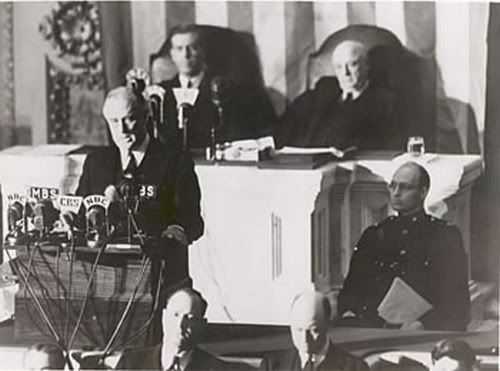
(The American President, Franklin Delano Roosevelt was giving a speech to the nation about Japanese attach on Pearl Harbor and American’s entering into the World War II.)

“I ask that the Congress declare that since the unprovoked and dastardly attack by Japan on Sunday, December 7th, 1941, a state of war has existed between the United States and the Japanese empire.”

The above paragraph is an excerpt from the speech of Franklin Delano Roosevelt, the 32nd president of the United States. He gave this speech on December 8th, 1941, one day after Japan’s attack over Pearl Harbor. With this speech, the United States of America entered into the World War II.

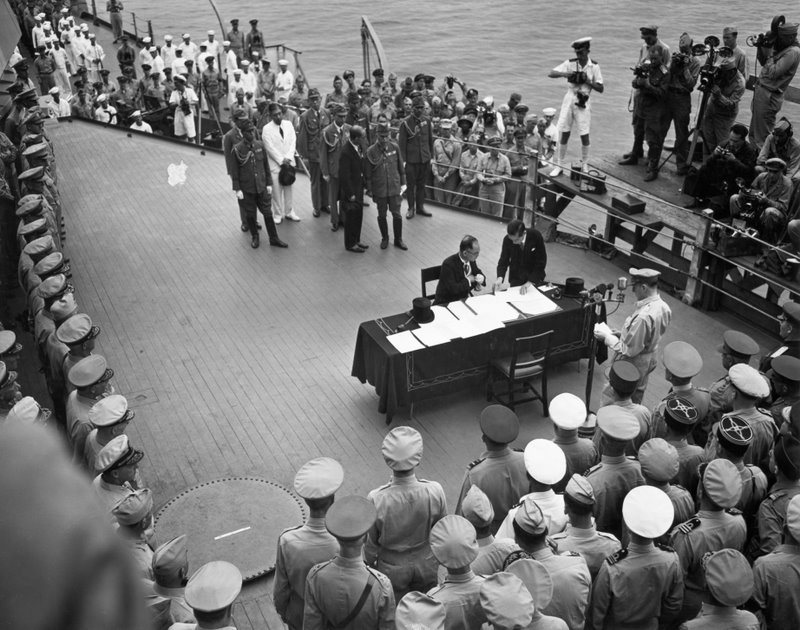
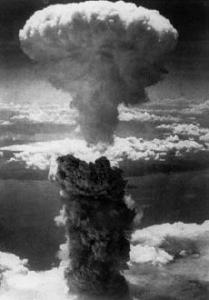
Four years later, after the United States entered into the war, Americans bombed at Hiroshima and Nagasaki, large cities of Japan on August 6, 1945. In September 1945, Japanese legally surrendered. With that surrender, the World War II was officially ended.

(After Hiroshima and Nagasaki were bombed in August 1945 and Japanese surrendered in September 1945.)
Sixty Three years later, after the end of World War II, in the fall semester of 2008, there is a global classroom, which is one of educational joint programs between the college of DuPage, Illinois, the United States and Hiroshima Jogakuin University of Japan as a sign of higher and closer bilateral relationships between the two countries.


(The Global Classroom at the College of DuPage – USA)
(Global Classroom at Hiroshima Jogakuin University – Japan)
How an amazing program it is! How are we (students) lucky to be part of this global classroom! Our instructors are Dean R. Peterson and Shingo Satsutani.
The process is - combination of two subjects, which are ‘Marriages and Family’ and ‘Civilization and Culture of Japan.’ In the global classroom, students from both sides are divided into five groups. Then, we write one paper per each group of both sides on the following categories:
(1) Changing Family
(2) Love, Sex, Mate Selection
(3) Power and Violence
(4) Work and Family
(5) Divorce, Marriage Dissolution, Growing Older.
I am in the group one, and our group at College of DuPage writes a paper about changing family patterns in the United States, and group one of Hiroshima Jogakuin University writes about changing family patterns in Japan.

After that, we exchange the papers each other between Japanese students and American students. The global classroom for our college is situated at the Open Campus Center (OCC) building in west campus of the college. The room number is OCC 106 and it is a studio classroom with the cameras, spotlights, microphones, Television screens, etc.

We, the American students and Japanese students together see, talk, read, discuss, ask, answer, agree, disagree, smile and laugh at each other. In this point, you may have a question about the language problem because American students write papers and speak in English and Japanese students write papers and speak in Japanese. Our instructor, Shingo solves that problem. He is a key interpreter and translator of all discussions and papers of both sides through out the global classroom period.

(Instructor Shingo Satsutani is interpreting in the Global Classroom)

It is amazing progress of modern technology and the way of great usage by humans, which is in the field of education and bilateral relationship between two countries. It is one of the greatest class experiences in my college life as well. It is also great sign of today’s close relationship between the two big foes in some sixty years ago. That is the way how the nations of the world should be; go by our own different ways and cooperate in our common goals and march forward together, friendly, peacefully and helpfully.
(Joint Flags of Japan and the United States)
Briefly, the amazing innovations of modern technology, excellent progress of bilateral relationship of – foes to friends, changing revenge generation to friendship generation, the fantastic combination between east and west, the informative exchange between Japanese students and American students, are all dramatically, remarkably and unforgettably included in our global classroom.

Special thanks to everybody!
Picture: http://img.photobucket.com/albums/v251/joserouse/Historical/FDRspeech.jpg
http://wwwdelivery.superstock.com/WI/223/1647/PreviewComp/SuperStock_1647R-41350.jpg
http://aboutjapan.japansociety.org/resources/category/1/6/3/3/images/BE047790.jpg
http://www.britannica.com/blogs/wp-content/uploads/2007/11/pearl.jpg
http://www.skeptically.org/sitebuildercontent/sitebuilderpictures/hiroshima-bomb.jpg