Pages

Monday, February 18, 2008

Yesterday, I won a battle!


Yesterday, when I came back from my sister-in-law’s house, I found something that made me appreciation by myself.

I was driving. There was a car in front of me, which was driven extremely slowly, less than 10 miles per hour on the road of speed limit 30 miles per hour. And yet, sometimes, it was looked - almost going to stop on the road. I was really short-tempered with the driver of that car. Nevertheless, as soon as I realize that I was in angriness, the bad feeling has reduced and I was thinking – that driver also could not mean to drive that much slowly. Something might be being happened with driver or with someone who was in the car. I noticed that two people were in the car; a driver and another one in the passenger’s sit and I guessed they were discussing about something, too, because I saw the person who was sitting in the passenger’s sit often turned his face to the driver’s. Whatever, I gave an understanding with them or with that driver. I was also slowly driving just like they did.

The driver from a car at back of me was angry and giving the horns seriously. I could do nothing without the car in front of me drove fast. Though it was no-passing zone, the driver of car, back of me tried to pass both of my car and that slow-drive car. As soon as he was going to pass my car, unexpectedly and without any indication, the front (slowly driving) car turned left and drove into a building at the left side. The two cars were almost hit.

I drove my car under the speed limit and got back home safely.
I was thinking my practice that to remember by myself about my angriness worked. I won a battle by myself! I was happy.


Picture:
http://www.destination360.com/north-america/us/utah/images/s/utah-climbing-trips.jpg

Friday, February 15, 2008

Quote of the Week: No Man is an Island!


“The questions are necessary but insufficient. They reflect our helplessness. They are tacitly about placing blame, about distancing ourselves from the moment, about preventing the unpreventable.
The answers, no matter how insightful, cannot begin to heal a community’s loss.
That is now NIU’s tragic burden. That is our burden, too.”

Source: Editorial of Chicago Tribune (February 15, 2008)

Note: 5 students dead and 16 others injured in 3 p.m. attack at Northern Illinois University on February 14 (Valentine day), 2008. They all are in our prayers!!!

Picture: CNN

Tuesday, February 12, 2008

Be A Conscious Person, To Not To Be An Extremist


Since I was very young, I read the Buddha’s words and his teachings. Today, I would like to share with you about one of the Buddha’s valuable teachings.

In daily lives, we all get happiness, sadness, angriness, kindness and so on, since each of us has anger, ignorance, greed, desire etc. Often we get regret from things we already did those we should not did and also from things we did not do those we should did, in past. How can we control those feelings and patterns? How can we change those matters from negative to positive?

I am now trying to practice one of the Buddha’s basic teachings about our inner, which is to be conscious that when I am happy, try to know at once by myself that I am in happiness, when I am sad, to know at once by myself that I am in sadness, when I am angry, to know at once by myself that I am in angriness, when I am greedy, to know at once by myself that I am in greediness, when I am loving, to know at once by myself that I am falling in love. That way helps me a lot, especially when I am taking care of my kids. I am often short tempered and angry with the kids. After I practice to be a conscious person, I feel I am going by the right path. Since I remember to remind by myself about my feelings, it helps me to avoid to not to be an extremist with those angers, ignorance, desires and greed.

The Buddha also teaches ‘to choose to go by the middle path.’ He said that middle path is the right and the most appropriate way, which makes us to not to be extremists for any happiness or sadness or angriness or greediness or any kind or any mean of feeling in our lives. However, we all also know that we, ordinary people have deep problem with governing those feelings, actions and reactions, but I would like to kindly suggest you to practice to be conscious persons more and more in your daily lives.

All of our feelings, actions and reactions come from our inside, which are based upon what we feel, what we see, what we hear, what we smell, what we taste, what we think and what we believe. To govern by ourselves, to avoid being extremists, let us practice to be conscious persons.

When you are happy, please try to know at once by yourself that you are in happiness.
When you are sad, please try to know at once by yourself that you are in sadness.
When you are angry, please try to remind at once by yourself that you are in angriness.
When you are greedy, please try to know at once by yourself that you are in greediness.
When you love, please try to know at once by yourself that you are falling in love. The Buddha said that to try to know every single feeling, every single emotion, every single touch of us, such as when we are tired, when we are hungry, when we are sleepy, when we are hurt, etc.

I believe when you are successful to be aware with them, you will be more and more happy person.

Be a conscious person, avoid being an extremist. Don’t let us allow to lose by ourselves.

Opinions are warmly welcome. Thank you very much and have a good day!

Picture: http://www.abundance-and-happiness.com/images/conscious-mind.jpg

Friday, February 8, 2008

Our LTA Class and Covey’s LTD


The program that I am studying in college is called LTA; Library Technical Assistant. In this semester, I am taking ‘readers’ advisory’ and ‘library workplace skill’ classes of that program.

Our textbook in ‘library workplace skill’ class is ‘7 Habits of Highly Effective People’ written by Stephen R. Covey. This is an excellent book and I will write what I learn from this book and my opinion on this book, later. Here, what I am going to write is Covey’s instruction – LTD.

Covey suggests us, the readers that when we read this book, to follow or practice these three steps, LTD:
(1) Learn
(2) Teach, and
(3) Do (it).

Then, I am thinking why he intently and significantly gives this advice to us. Let us see.
(1) Learn: It is simple. We have to learn, study and absorb idea, concepts and knowledge of the book. Learn!
(2) Teach: This is Covey’s very artful and strategic advice. I was a teacher in a State Middle School of Burma. I taught English, Math and History to 6th, 7th and 8th grade students. A basic thing that I learned through a teacher’s experience was – ‘I needed to understand well about the subject before I entered into the classroom.’ Win-win situation is also usually occurred from the good teaching for good reason between teacher and student/s. Moreover, that idea, subject or concept is spread. I think because of those reasons (well understanding, win-win and spreading), Covey set up this advice – ‘Teach!’
(3) Do: Have you been read one of the Aesop’s fables, ‘The Wizard,’ which was about a well-known fortuneteller? One day, rich fortuneteller’s possessions were stolen. Then, a man asked him that why he did not foresee his misfortune by himself. The answer was “It is easier to be wise for others than for ourselves.” Often, we find that it is difficult to practice or keep going on something though we believe in that it is right and appropriate to do, especially when something concerns with big change, such as our habit, belief, etc. I think that’s why Covey urge us to ‘Do.’

Actually, not only about 7 habits those Covey conducts, but also many things in our lives suppose to be enthusiastically learned, win-winly taught and practically done.
Special thanks to guru Stephen R. Covey for his deeply thinking, writing and sharing with us, and our instrutor, Professor Linda Slusar who set up this fruitful book, 'The 7 Habits of Highly Effective People,' to be our textbook in the class.

Wednesday, February 6, 2008

Picture of the Week and Real Decision Maker


This is not a sense from movie. This is not also an accident. This is not computer creation.
This was real sense, which an uncle dropped his nine months old nephew from his apartment. His name was Kamil Kaplan and the boy’s name was Onur Celar. The boy was safed.
The apartment was on fire and Kamil decided to drop his nephew as he saw he could trust the eyes of police officer who was standing under the building. This was happened in Germany on last Sunday.
According to CNN news, “It was terrible. I just had to make a decision," Kamil told CNN.
Kamil is kind of real decision maker.


Source: CNN
Picture: AFP/CNN

Friday, February 1, 2008

The Most Beautiful View of the Week!


Former President John F. Kennedy said that, “My fellow citizens of the world, ask not what America will do for you, but what together we can do for the freedom of man.”

Nevertheless, there is no doubt that billions of citizens of the world are interestingly watching what America will do in coming years!


Picture: CNN

Wednesday, January 30, 2008

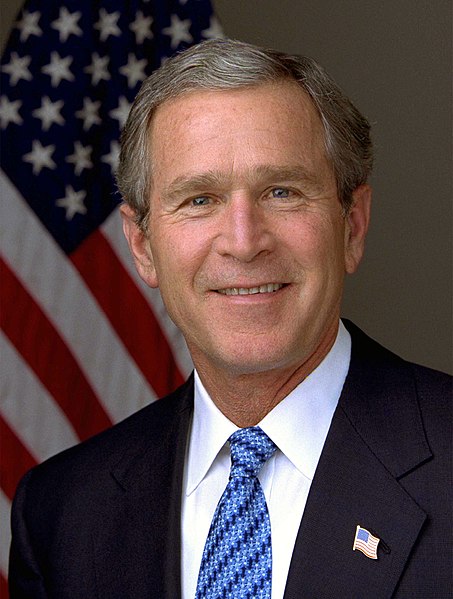
Quote of the Week: Finding an Inspiration


“Addiction is hard to overcome. As you might remember, I drank too much at one time in my life. I understand that sometimes you can find the inspiration from a higher power to solve an addiction problem.”

George W. Bush
President of the United States

Note: President Bush, speaking about his battles with substance abuse at the Jericho program in Baltimore. Bush, who as a young man was arrested for driving under the influence, gave up alcohol at age 40 and became increasingly involved in his church in Texas.


Source: Chicago Tribune (January 30, 2008)

Monday, January 28, 2008

Play and Feed: To be a Word Richer and Rice Donator


How do you improve your English vocabulary skill while you are just simply clicking?
Do you want to play a word game? (Click on the answer that best defines the word.
If you get it right, you get a harder word. If wrong, you get an easier word.)

http://www.freerice.com/

While you are playing a fun game, you are also being a rice donator to the United Nations World Food Program.
http://www.freerice.com/

Moreover, do you want to be smarter?
Do you want to improve your speaking, writing, thinking, grades, job performance, etc?

Just click here; http://www.freerice.com/

Be a player and donator!

Thank you!


Picture: http://www.ehponline.org/docs/2001/109-12/rice.jpg

Friday, January 25, 2008

A Piece of Curiosity on RATS and STAR


Some years ago, I have read about a business news in Philippine. As you see the name ‘Business News,’ please don’t think about companies, stocks, shares, banks, conglomerates, etc. It was just about selling rats in some local markets of Philippine.

The interesting thing in the rat market was the rat sellers’ persuasion or making the name ‘rats’ to be interested in. How did the rat sellers create the name ‘rats’ to get peoples’ attention, do you know? They yelled 'STAR! STAR! STAR!' They wrote ‘STAR’ on the papers of advertisement because when you read each letter of ‘RATS’ back to front, from ‘S’ to ‘R’; you will find ‘STAR.’ I will show you to be more obvious as below:

R A T S
S T A R

Then, I am also thinking about the humans’ recalling on memory. We recall our memories by several ways - oppositely, differently, similarly, especially when we had two things matched. For example, when you see the word ‘war,’ by the most part, you will match in your memory with the word ‘peace.’ When you see the name ‘Romeo,’ your memory will definitely make the automatic recalling of ‘Juliet.’ When you see the word ‘black,’ you will match with the word ‘white.’ What I mean here is about the ways that people usually recall their memory about the two things, which are matched by any way. Every normal person has this experience enough in daily life. Right?

Alright, I would like you to participate in this scenario by yourself. Let us say that you were in that market where rats were being sold, on those days and you ate the rats there.
My curiosity here is – next time or a decade or many years later, when you see RATS, do you think that your memory at once will recall the STAR?
Or, do you think that when you see STAR, your memory will remind you about RATS?
Which way will be mostly based on; rats to star, or star to rats?

Thursday, January 24, 2008

Laughs and Smiles


Laughs

Today, I am reading my notebook, which I have had since I was a university student in Burma. I found ten kinds of laugh. I took this note from a book but I don’t remember from which book it was. I am sorry.

The ten kinds of laugh that I found in my notebook and I would like to share with you are:
1) An old miser’s chuckle (or) A quiet laugh
2) A giggling school-girls’ laugh
3) A gloating laugh
4) An embraceable laugh
5) A simmering laugh
6) A heart laugh
7) A polite laugh
8) A weak-minded person’s laugh
9) A cynical laugh
10) A scale-ascending laugh

Smiles

In capitalcitysmiles site, there are three main types of smiles:
1) The Commissure Smile
2) The Cuspid Smile
3) The Complex Smile

Anyway, what is difference between laugh and smile?

Fundamentally, I think the big different thing is ‘voice’ or ‘making sound’ between laugh and smile. Roughly, a smile does not have voice but a laugh has. The other different matter between laugh and smile is – people can more feign when they smile than when they laugh.

I have read in a religious story that ‘however an animal is cunning, you can find it much easier than the meaning of a man (a human being)’s dishonest smile.’

What do you think?


Source: http://capitalcitysmiles.ca/

Picture: http://thesituationist.files.wordpress.com/2007/06/monkey_smile.jpg